
Meet our Oncology Nurse Navigator: Elizabeth Peltz, RN
- Category: Cancer Care
- Posted On:
- Written By: St. John's Health
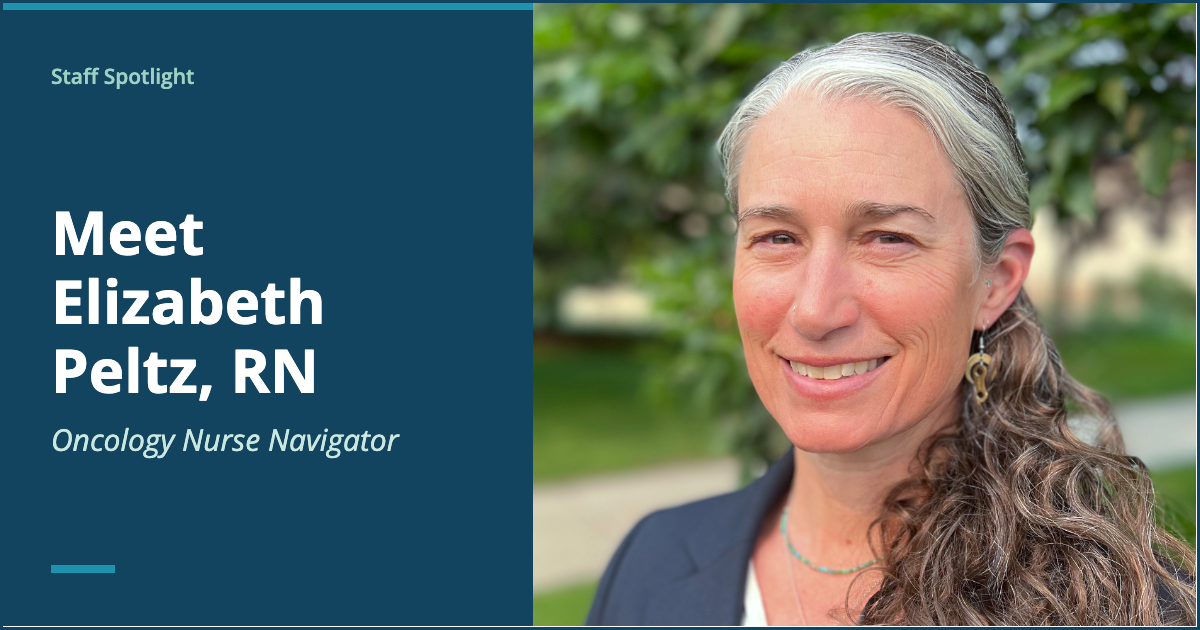
“Often when people hear the word cancer, they don’t hear a lot after that,” says Elizabeth Peltz, Registered Nurse and Oncology Nurse Navigator at St. John’s Health. Fortunately, they have Peltz to help listen, take notes, and ask follow-up questions for them.
For the past several years, St. John’s Health has been on a mission to expand access to cancer care and services in the region. In 2025, recognizing the complexity many patients face after receiving a cancer diagnosis, St. John’s Health created a new position: Oncology Nurse Navigator. For Peltz, it was the perfect next challenge in her nursing career.
“Oncology at St. John’s Health has grown so much, especially since Dr. Cohen has joined,” says Peltz. “I think there was a recognition that our patients needed a kind of home base—a singular contact that could observe and coordinate their care, both across departments and across different facilities.” Today, Peltz’s role helps fill that need.
What does an Oncology Nurse Navigator do?
Peltz’s role is to act as the patient’s advocate, expert clinical guide, scheduling manager, and supportive sounding board all in one. “My job is to try and eliminate the burden of coordinating care for our cancer patients,” says Peltz. That can mean everything from helping a patient understand their diagnosis and what the next steps are, to streamlining their appointments to reduce travel and stress.
“An Oncology appointment can feel like a fire hose for a newly diagnosed patient. It’s never an easy diagnosis to receive and navigate,” says Peltz. “To help, I’ll sit in on appointments with patients who have just been diagnosed, and follow up the next day to see if they have questions and make sure they fully understand everything.”
On top of trying to heal, understand their diagnosis, and recover from treatments, it can feel like the various appointments and tests start to pile up—and patients often don’t know when and how it’s possible to streamline, says Peltz.
“It can be scary and complicated to come into this new world that you don’t understand and try to manage it all when you’re already feeing vulnerable,” she describes. “For example, a patient may need to travel to Huntsman Cancer Institute for surgery. But before that, they may need a colonoscopy and to get labs drawn. It all sounds simple in theory, but I am there to make sure that when the patient is getting an IV for their colonoscopy, that we draw those labs at the same time to make it easier for them.”
This level of coordination can be particularly meaningful for those traveling long distances for their appointments. “A round-trip drive from Dubois or Pinedale is very expensive right now,” says Peltz. Getting more accomplished in fewer visits is key.
Peltz’s guiding principles: Relieve the burden, be an advocate, answer the phone
For Peltz, coordination is about more than just managing calendars and appointments. It’s also about making sure patients receive the full spectrum of advocacy and support they need throughout their treatment. “I always think to myself: if the phone rings, answer it. If I receive a message from a patient, address it as soon as possible. I want to be a reliable form of communication and answers during a stressful time,” says Peltz.
Embodying an advocate means doing what she can to help patients feel confident and in control of their care plan. “While always in close contact with their providers, I try to empower patients with the knowledge and understanding of their diagnosis and treatment, so that they can make confident decisions with their families and with all the information.”
Acting as an advocate can also mean helping connect patients to different services that support and supplement their treatment. “There’s a tendency for patients to think, I’m dealing with my cancer right now. And then set everything else aside,” says Peltz. But often other services like physical therapy, mental health support, nutrition counseling and more can make a meaningful difference for patients during their journey. Peltz makes a point to ensure those needs don’t get overlooked.
Whether a patient needs rehabilitation after surgery, support coping with the emotional impact of a diagnosis, or guidance transitioning into survivorship, Peltz helps connect them with the right people at the right time. She describes the Oncology department at St. John’s Health as “a full support service. You aren’t just coming in to get a medication. You have a multidisciplinary team and approach to your treatment, and I’m proud of the work we do to connect patients to all the different services they need.”
If you or a loved one recently received a cancer diagnosis, rest assured that nurse Peltz and our team at St. John’s Health is here for you.
Click here to learn more, or call us at 307-739-4785.
___
Thanks to our generous community, the road to healing is about to get shorter. To learn more about our plans for a comprehensive new cancer center, visit www.stjohns.health/cancercenter.

.jpg)